
Rome is a town of 2,745,062 inhabitants in the province of Rome, in Lazio, Italy. It is the capital of Lazio.

The municipality covers 1307.71 km², with a density of 2,099 inhabitants per km².
The nearest airport is Rome Ciampino (CIA), about 14 km away as the crow flies. Read our guide to the airport.
Why visit
The Colosseum, the Vatican and two thousand years of history. Discover Lazio
Things to see in Rome
- The Basilica of San ClementeFaith
- St Peter's BasilicaFaith
- Castel Sant'AngeloCastles
- The ColosseumArchaeology
- Roman cuisine in TestaccioFood & wine
- The Trevi FountainArt
- The Roman Forum and the PalatineArchaeology
- The Borghese GalleryArt
- The GianicoloCuriosities
- The Orange Garden and the KeyholeCuriosities
- The Capitoline Museums and the CampidoglioArt
- The Vatican Museums and the Sistine ChapelArt
- Ostia AnticaArchaeology
- The PantheonArt
- Piazza NavonaArt
- The Coppedè quarterCuriosities
- St John Lateran and the Holy StairsFaith
- Santa Maria MaggioreFaith
- The Spanish StepsArt
- The Baths of CaracallaArchaeology
- TrastevereVillages
- The Via Appia Antica and the catacombsArchaeology
The Eternal City
Rome has been the centre of an empire, of the Catholic Church and of modern Italy, and it shows its three thousand years of history at every corner. Ancient ruins, Renaissance palaces, Baroque fountains and lively neighbourhoods sit side by side, and the best way to discover them is on foot.
What to see
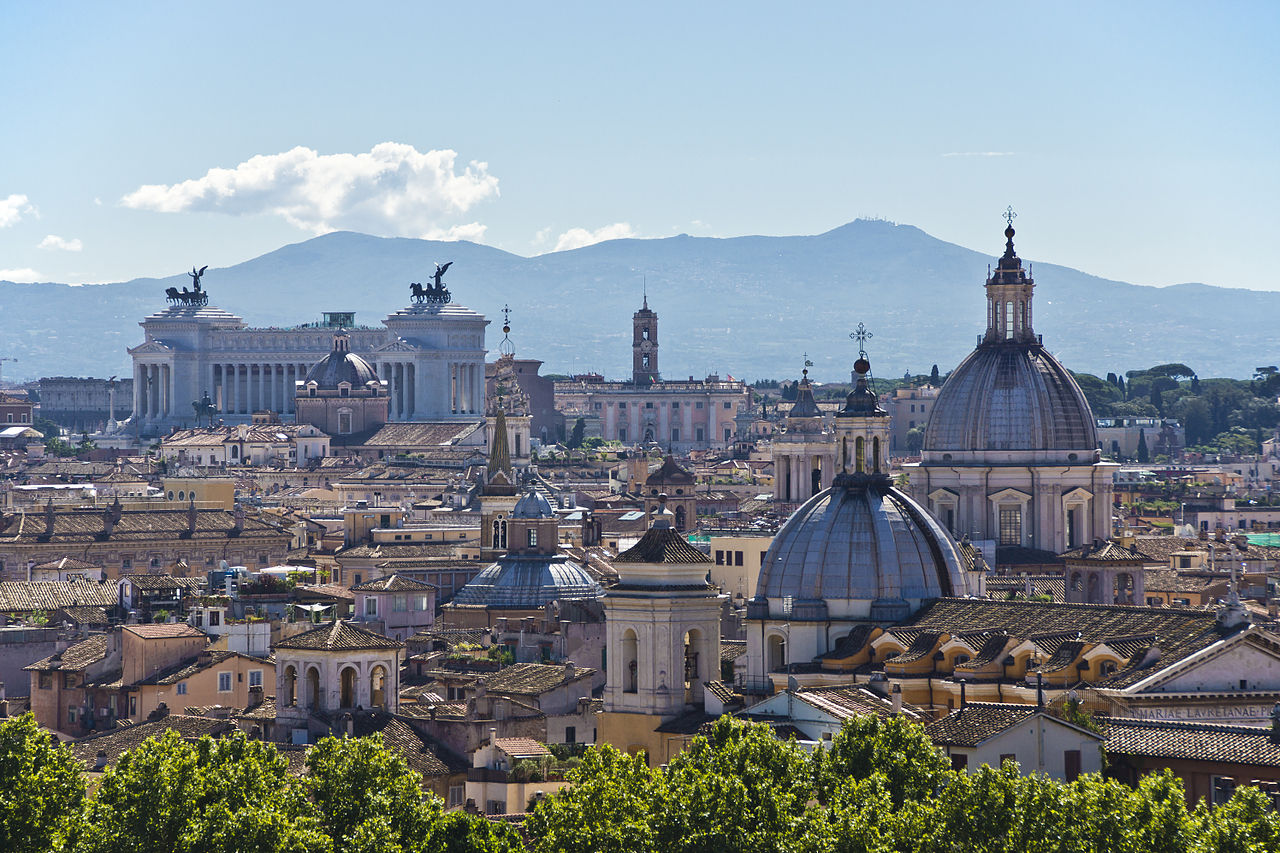
The heart of ancient Rome is the area of the Colosseum, the Roman Forum and the Palatine Hill, where the city was born. A short walk leads to the Capitoline Hill, designed by Michelangelo, and to the Pantheon, the best preserved temple of antiquity, with its open dome. The Baroque city spreads around Piazza Navona, the Trevi Fountain and the Spanish Steps.
Across the Tiber lies the Vatican, an independent state, with St Peter's Basilica and the Vatican Museums, home of the Sistine Chapel. Nearby, Trastevere is the place for an evening walk among cobbled lanes and trattorias. Don't miss the Borghese Gallery, the Baths of Caracalla and the Appian Way, lined with tombs and catacombs.
Food
Roman cooking is simple and strong: carbonara, cacio e pepe, amatriciana, artichokes alla giudia in the old Jewish quarter, supplì and pizza by the slice. In the morning do as the Romans do: a cappuccino and a cornetto at the bar.
A short history
Tradition dates the founding of Rome to 753 BC. From a village on the Palatine it grew into the capital of an empire that stretched from Britain to Mesopotamia. After the fall of the Western Empire in 476 the popes ruled the city for more than a thousand years and rebuilt it in the Renaissance and Baroque ages. Rome became the capital of united Italy in 1871.
Events and festivals
On 21 April the city celebrates its birthday with parades in Roman costume. Easter brings the Pope's Way of the Cross at the Colosseum and the blessing in St Peter's Square. On 29 June Rome honours its patrons Peter and Paul. Summer means open-air cinema, concerts and opera at the Baths of Caracalla; in October the Rome Film Fest arrives.
Around Rome
In an hour you can reach the villas of Tivoli, the ruins of Ostia Antica, the Castelli Romani wine towns and the beaches of the Lazio coast. Rome has two airports, Fiumicino and Ciampino, and its main station, Termini, links it to every Italian city.
Getting there
Rome has two airports. Fiumicino, the main one, is linked to Termini station by the Leonardo Express train in about half an hour; Ciampino is served by buses. High-speed trains reach Florence in an hour and a half, Naples in little more than an hour and Milan in about three. By car, leave it outside the centre: most of the historic core is a limited traffic zone.
When to go
2019-2024 averages: highs (red), lows (dark blue), monthly rainfall in mm (bars). Source: ERA5 data via Open-Meteo.
The warmest month is July, with average highs of 34° and lows of 21°; the coldest is January (12° by day, 4° at night). Most rain falls in November (164 mm over about 14 days), while July is the driest month (17 mm). Hours of sunshine go from 7 a day in winter to 14 at the height of summer. For walking and sightseeing with mild temperatures and little rain, the best months are September. At the height of summer the heat is intense: better to move early in the morning and late in the afternoon.
Getting there
Rome has a station within walking distance: Venezia is 0.3 km from the centre. Other stations: Venezia (0.3 km), Venezia (0.3 km).
The town in numbers
Population at the censuses since 150 and latest figure. Source: ISTAT, Wikidata.
In 150, at the first census of united Italy, Rome had 300,000 inhabitants. The historic peak was in 2017 with 2,873,494; today there are 2,745,062, that is 4% fewer than that peak.
Editorial texts by Italy Travel Escape; data from Wikidata, Wikipedia, ISTAT and Open-Meteo.
Rome on the map
Nearby towns
Where to stay in and around Rome
Tours and activities nearby
Offers from GetYourGuide. Some links are affiliate links: if you book we may earn a commission at no extra cost to you.